How to Make Dingy White Clothes Bright Again Without Damaging the Fabric
September 22, 2026
5 Chic Alternatives to Laundry Racks For Drying Laundry Indoors This Fall and Winter
September 27, 2026Bedding & Home Care
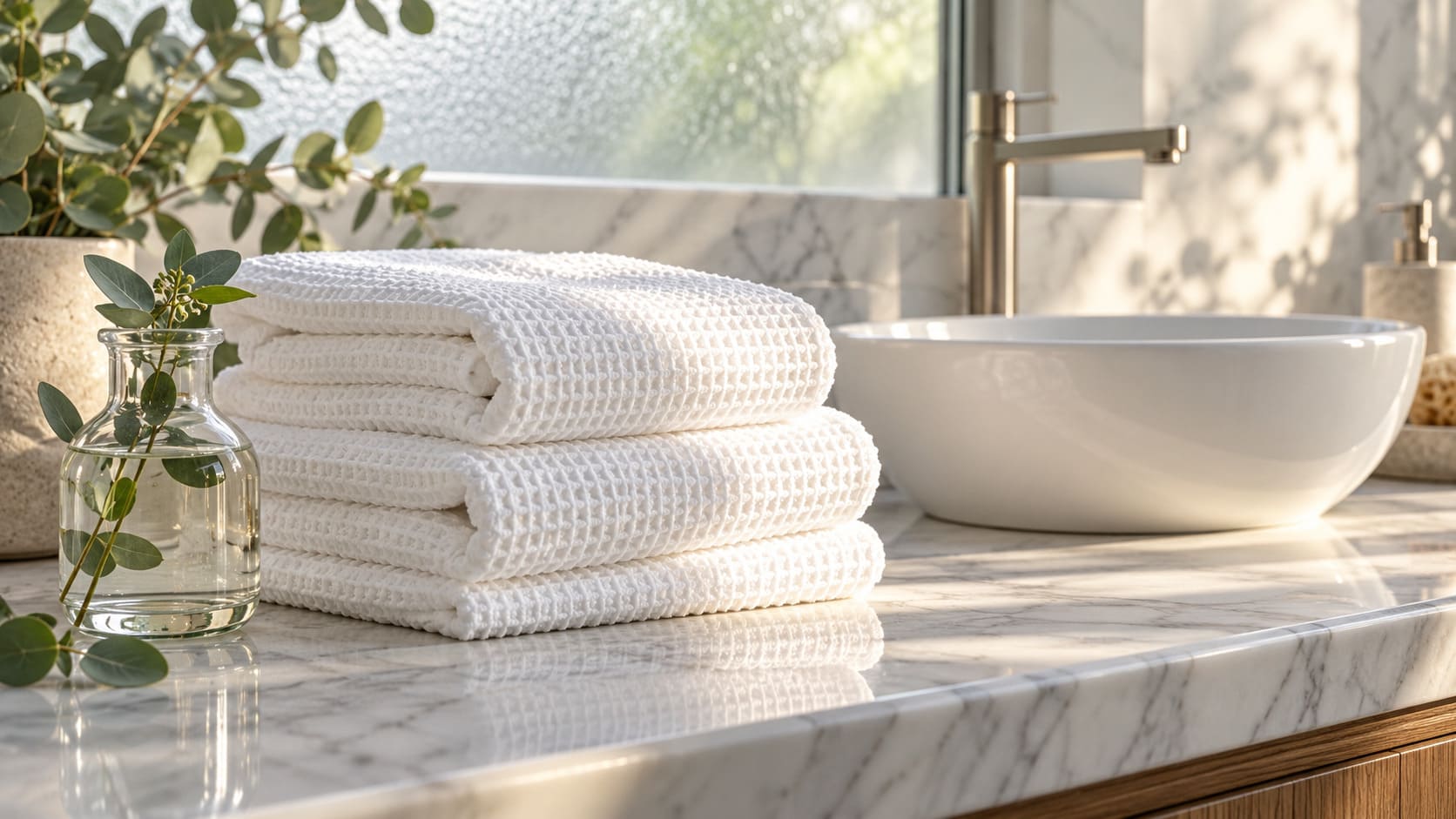
The Real Reason Your Bath Towels Smell Musty as Soon as They Get Wet
Few everyday disappointments match stepping out of a relaxing, hot shower, wrapping yourself in what looks like a clean towel, and immediately getting hit with a sour, musty odor. The most baffling part is that the towel smelled fine while folded on the rack—it only turns unpleasant the exact moment it meets water.
Most people assume their dryer did not run long enough or that their bathroom lacks ventilation. However, the root problem is almost always chemical buildup inside the cotton fibers. Commercial fabric softeners, dryer sheets, and excess laundry detergent create a waxy, water-repellent coating over time. This layer traps dead skin cells, body sebum, and moisture-loving bacteria deep inside the loops, activating that sour mildew smell the instant dampness returns. Restoring your towels requires stripping this film away to let the fibers breathe and absorb water properly again.
1. The Hot Water and Vinegar Reset Cycle
What it is for: Over cycles of regular washing, liquid detergent and conditioning chemicals fuse into an invisible, gummy residue that standard wash cycles cannot break down. Running a dedicated wash cycle on the highest heat setting with one to two cups of distilled white vinegar—and zero detergent—acts as an acid rinse. The acetic acid gently dissolves alkaline soap scum, unbinds mineral scaling, and flushes out stagnant mildew trapped inside the towel’s inner cotton loops.
2. The Baking Soda Deodorizing Follow-Up
Why it is recommended: While vinegar breaks down stubborn chemical buildup, it does not neutralize deep-seated acidic odors like sour sweat and persistent mildew bacteria. Following the vinegar cycle with a second hot-water wash using half a cup of pure baking soda (sodium bicarbonate) neutralizes pH levels. Baking soda chemically deodorizes the towel’s core, releasing locked odors without coating the surface in artificial fragrance.
3. Banishing Fabric Softeners and Scent Boosters for Good
Softening and Fabric Care: Fabric softeners and fragrance booster beads contain silicones and petroleum-based softening agents that coat towel fibers to make them feel artificially slippery. This coating ruins the natural capillary action of cotton, making towels significantly less absorbent and turning them into moisture traps that breed bacterial biofilms. Replacing commercial softeners with pure distilled white vinegar in the rinse compartment ensures towels stay naturally plush, thirsty, and odor-free wash after wash
4. Proper Airflow and Low-Heat Fluffing
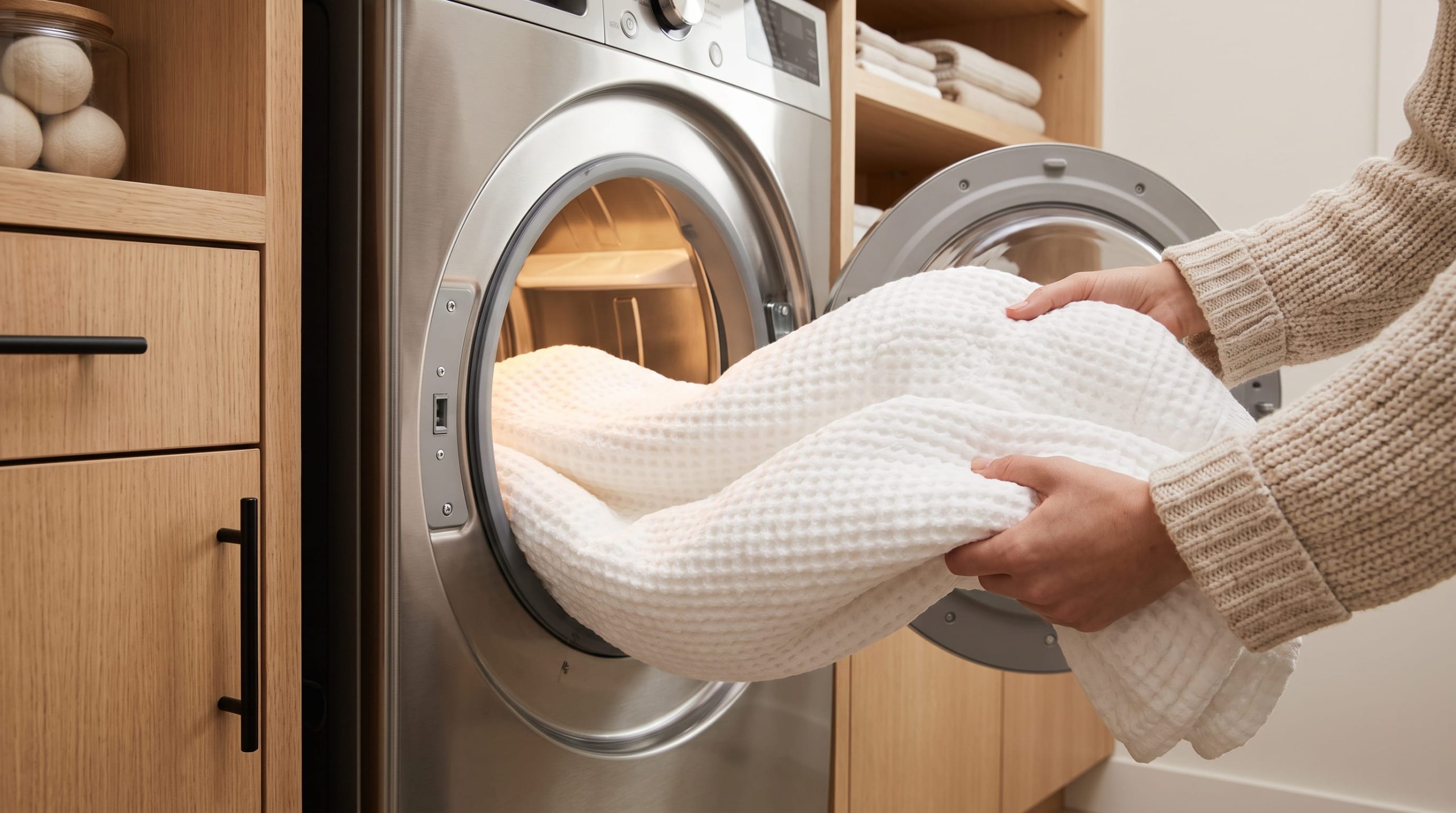
Hygiene and Drying Care: Leaving damp towels in a heap on the bathroom floor or hanging them bunched up on a narrow hook prevents air from circulating through the dense cotton weave. This slow drying window gives trapped mildew bacteria the exact warm, damp conditions they need to multiply. Always spread towels wide across a flat towel bar after use, and dry them thoroughly in the dryer on medium heat with two wool dryer balls to circulate air through every fold.
The Ultimate Convenience Solution: When Time is of the Essence
The Transition: Between running multiple back-to-back stripping cycles, measuring specific vinegar rinses, and dealing with damp, heavy loads of terry cloth, revitalizing musty towels requires time and machine capacity that busy households simply do not have.
The Pitch: That is where NanoClean delivers effortless care. NanoClean is a premium laundry valet service that collects your linens and towels straight from your doorstep, washes them using hypoallergenic, dermatologist-approved formulas in state-of-the-art commercial machines, and delivers them back cloud-soft, ultra-absorbent, and completely odor-free. Ditch the musty towel cycle forever with their convenient flat-rate “Unlimited Bag” designed for seamless living.