How to Eliminate Storage Odors from Fall Blankets and Heavy Winter Clothes
September 30, 2026
The Ultimate Guide to Removing Pet Hair from Clothes: Science, Hacks, and Effortless Care
October 3, 2026Fabric Care
How to Remove Mud and Wet Rain Splatters from Fall Pants and Long Coats
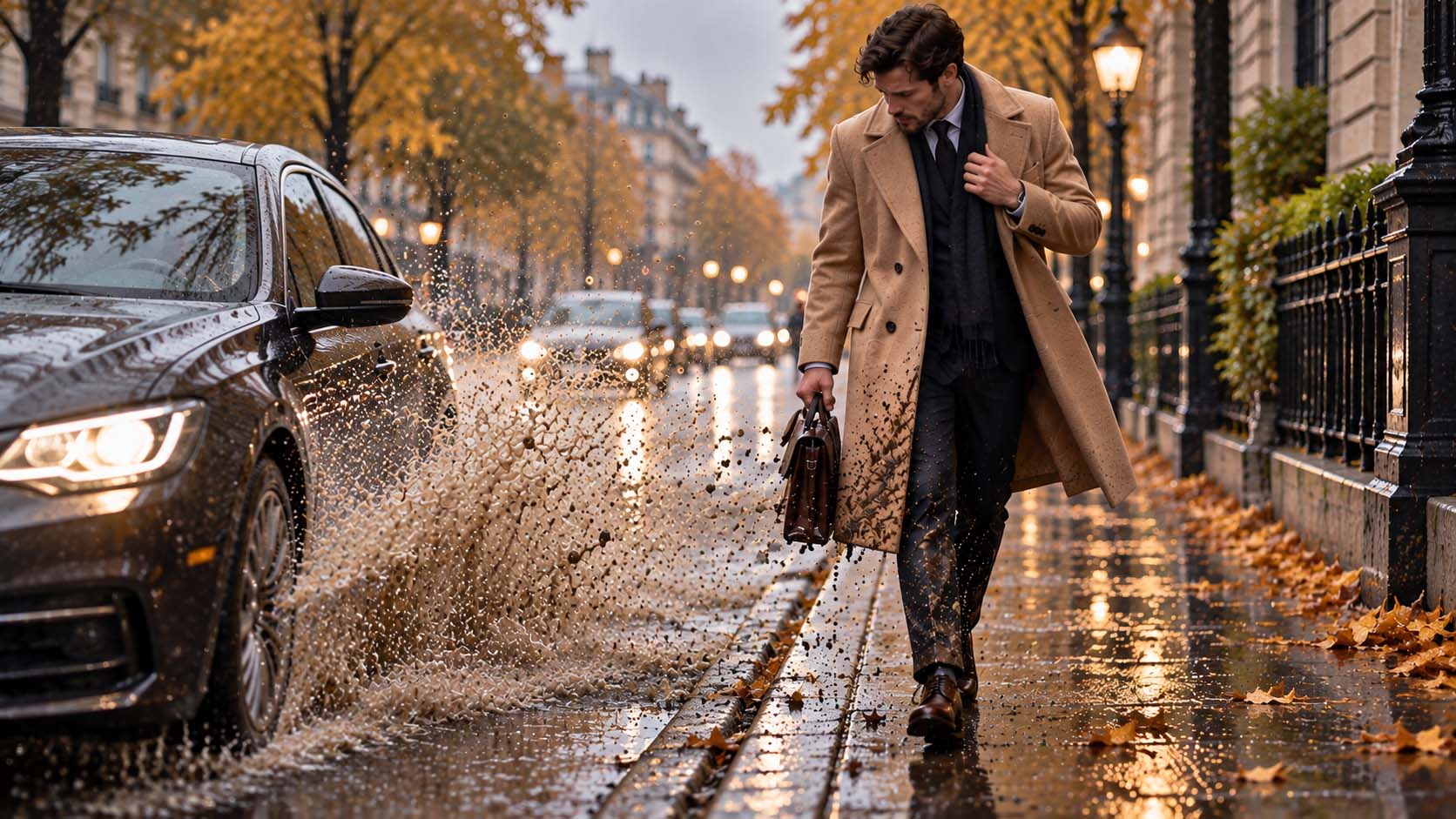
The arrival of autumn brings scenic fallen leaves and crisp air, but the season’s sudden rain showers instantly turn dry sidewalks and garden paths into wet, muddy slush. A brisk morning walk or a quick commute can easily leave the lower hems of your tailored trousers, denim jeans, or favorite wool trench coats dotted with dark, unsightly mud splatters.
The instinctive reaction is to grab a damp paper towel or wet cloth and vigorously rub the fresh splashes right away. However, doing so pushes wet soil particles, mineral clay, and oily road grime deeper into the weave of the fabric, transforming a surface splatter into a stubborn, permanent stain. Safely restoring your autumn wardrobe requires the right patience and targeted soil-lifting techniques that break down grit without roughing up tailored materials.
1. The Critical "Let It Dry Completely" Rule
What it is for: Wet mud is an emulsion of water, organic soil, and dissolved minerals. Rubbing it while damp merely spreads the grime across surrounding clean threads and drives the staining pigments deep into the garment’s core. Letting the mud dry completely allows the water content to evaporate, transforming the viscous splatter into brittle, crusty dirt. Once dry, you can lightly tap the back of the fabric to dislodge the majority of loose debris without any liquid soaking into the weave.
2. Dry-Brushing the Surface Crusted Grit
Why it is recommended: Once the mud is bone-dry, attempting to wash it immediately in water will just turn the dry dirt back into liquid mud inside your washer. Instead, place a flat, rigid surface behind the stained area and gently flick away the loose crust using a soft-bristled clothes brush or a dry, soft toothbrush. Work in gentle, short strokes in the direction of the fabric grain to lift the crust away rather than grinding it down into the threads.
3. The Dish Soap and White Vinegar Pretreat Bath
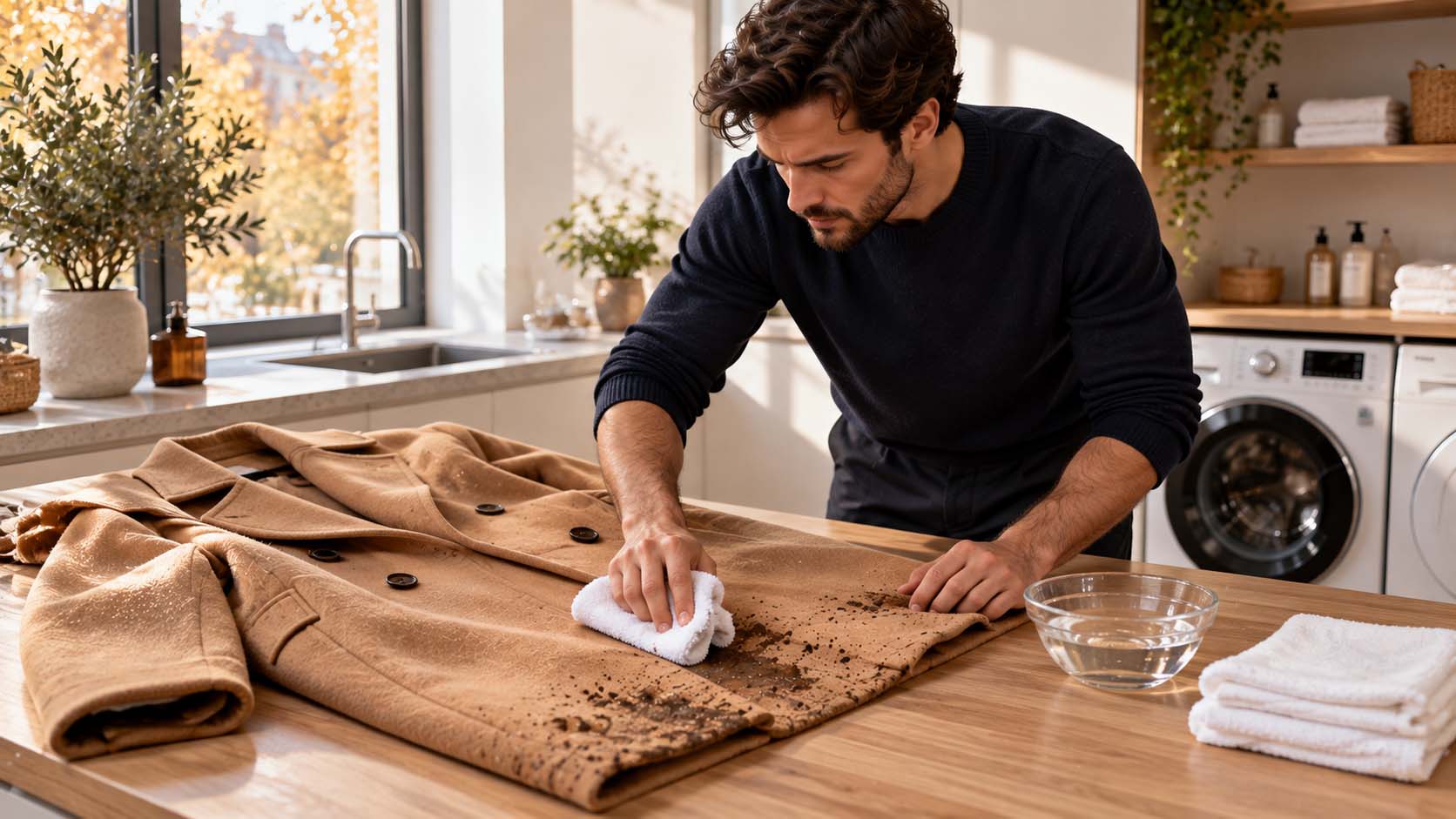
Softening and Fabric Care: After brushing away the surface dirt, what remains is an oily, mineral-heavy shadow left by street residue and ground oils. Mixing a few drops of grease-cutting liquid dish soap with equal parts distilled white vinegar and lukewarm water creates a powerful stain-lifting solution. Dab the solution onto the remaining spots using a clean microfiber cloth, gently massaging the fibers. The dish soap cuts through road grease, while the vinegar lifts mineral scaling without fading seasonal dyes.
4. Cold Water Rinsing and Air-Drying Care
Hygiene and Drying Care: Always rinse treated mud spots using cold or lukewarm water from the reverse side of the fabric to flush remaining particles outward. Never use hot water, as heat binds protein-based organic matter in the dirt directly into the threads. After running the garment through a regular cold wash cycle, hang it on a sturdy wooden hanger to air-dry naturally; avoid the high heat of a clothes dryer until you are 100% sure the mud ring has completely vanished.
The Ultimate Convenience Solution: When Time is of the Essence
-
The Transition: Carefully waiting for mud splatters to dry, brushing away gritty debris, and delicately spot-treating long trench coats and delicate trousers eats up precious time during busy autumn workweeks.
-
The Pitch: That is where NanoClean delivers effortless care. NanoClean is a premium laundry valet service that picks up your weather-stained trousers, heavy coats, and everyday clothing straight from your doorstep, treats stubborn seasonal stains with expert fabric-safe formulas, and returns them immaculate, fresh, and perfectly pressed. Skip the messy post-rain cleanups completely with their convenient flat-rate “Unlimited Bag” designed for seamless living.